


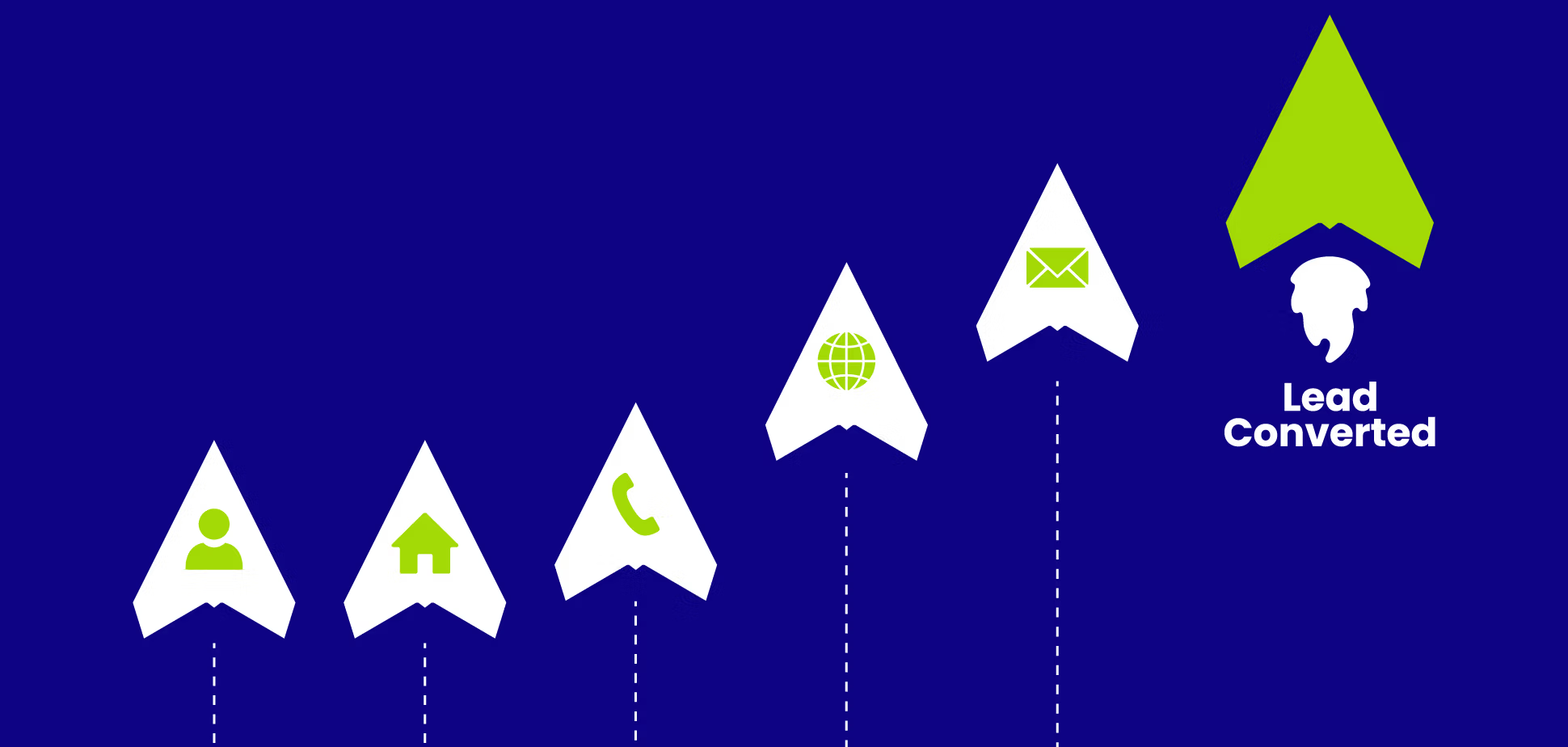
Most Leads Don’t Convert After One Interaction. Here’s Why.
Most real estate research shows that one interaction rarely seals the deal. A consistent, well-timed follow-up is what moves leads forward. The exact number of touchpoints depends on several factors: the type of interaction, the services you’re offering, where someone is in their decision journey, and whether you’re reaching a cold audience or nurturing an existing contact.
What are touchpoints?
So, what counts as a touchpoint? More than you might think.
- Digital ads
- Direct Mail
- Phone calls
- Emails
- Word-of-mouth / referrals
- Organic social posts
- Newsletters
- Open house events
- Event networking
- Billboards
- Podcast placements
Even thoughtful branded client gifts all play a role in building familiarity and trust. When those touches work together, the impact multiplies. Coordinated messaging strengthens brand recognition, reinforces credibility, and keeps you top-of-mind long before someone is ready to make a move.

7+ Touchpoints? 12? 20? What's the real number? Let's talk numbers.
Warm leads: 5 to 12 meaningful touches
Data suggests the average real estate warm inbound lead needs 5 to 7 touches before converting.
Longer decision cycles (buyers/sellers exploring): 7 to 13+ touchpoints
High-trust industries like real estate often need more interactions to build credibility and familiarity before a prospect is ready to pull the trigger.
Cold or long-term farming prospects: 20 to 50 touches
Neighborhood farming, early-stage sellers, or early-stage buyers can take dozens of brand interactions across print, digital, and personal outreach.

Why do prospects need so many touchpoints?
The Trust Factor: Prospects need multiple touchpoints because real estate decisions aren’t impulse buys, they’re high-stakes, high-emotion commitments. Before someone trusts an agent with one of their largest financial assets, they’re subconsciously asking the same question over and over: Do I know you? Do I trust you? Are you the right fit? One interaction sparks awareness. A few build familiarity. Consistent, coordinated touches build credibility.
People move at different speeds, compare options, get distracted by life, and revisit the decision months later. Repeated exposure across channels reinforces your expertise, keeps you top-of-mind, and lowers the perceived risk of choosing you. It’s not about repetition for the sake of noise, it’s about building confidence through consistency.
The Ad Overload Dilemma: Forbes estimates we're exposed to somewhere between 5,000 and 10,000 ads a day. Sounds dramatic. And you’re right, you’re not consciously seeing that many. You’re filtering most of them out.
Ads live everywhere now. In Google search results. In social feeds. In inboxes. In text messages. On streaming platforms. In podcasts. On the radio. Along the highway. Marketing isn’t knocking politely anymore. It’s woven into the wallpaper of daily life.
Which means even when someone is interested in your services, they can still miss your message. Or see it once and forget it by dinner.
That’s why repetition matters. Research consistently shows that repeated exposure strengthens brand recall and increases trust. Not because people love being marketed to, but because familiarity reduces friction. The more often someone sees your name in a consistent, coordinated way, the more credible and memorable you become. In a world saturated with noise, the winner isn’t the loudest voice. It’s the one that shows up consistently enough to be remembered.
Why Do So Many Agents Stop at 1-2 Touchpoints?
Plenty of industry reports show the same pattern: many agents follow up once… maybe twice… and then move on. Not because they don’t care. Because they assume no response means no interest.
Here’s the truth. Silence doesn’t mean “not interested.” It usually means “not ready.”
Agents pull back for a few common reasons. They don’t want to feel pushy. They worry they’re bothering someone. Or they assume their marketing “didn’t work” because a lead didn’t convert immediately. But real estate isn’t instant coffee. It’s a trust-based decision with timing that rarely lines up perfectly on the first touch.
When you understand how many touchpoints it actually takes to build familiarity and confidence, stopping at two isn’t polite. It’s premature.
The key isn’t blasting the same message repeatedly. It’s layering different types of touchpoints. A postcard. A helpful email. A market update ad. A social post. A quick check-in call. When the message is consistent, but the format varies, you stay visible without feeling overwhelming.
Consistency builds comfort. Comfort builds trust. And trust is what turns a quiet observer into your next listing.

